


As Q2 comes to an end, it's the right time to take a look at your marketing strategy's success this year to determine how to optimize your efforts for the end of the year and into next year.
Reflecting on this year’s goals, objectives, + KPIs
How to use this year’s strategy to start paving the way for next year
Staying ahead of the game next year
As we approach the mid-year check point, the transition from Q2 to Q3, it’s a great time to take a look back at the success of your marketing strategy up to this point. Your strategy has had six months to be put to the test, and now your team should revisit your objectives, track your key performance indicators (KPIs), and have a discussion about what’s working well and what isn’t. This will set you up for success for the rest of the year and help you begin to plan your budget and strategy for next year. Because believe it or not, now is the right time to start.
Reflecting on this year’s goals, objectives, + KPIs
The marketing landscape is ever-changing. While some pieces of your marketing strategy may be crushing, others may have dropped somewhere along the way. Combine quantitative and qualitative observations to create an analysis and determine what’s working and how it’s contributing to your overarching goal for the year.
Even when you have everything you need in front of you, it can be difficult to know where to start. Let’s focus on three types of marketing strategies to determine how to conduct your analysis.
Lead Generation
The purpose of a lead generation strategy is to attract potential customers, capture their contact details, and nurture them to become qualified buyers. For your analysis, start by taking a birds-eye view of your strategy and how it relates to the marketing funnel.
Where do your customers enter the funnel, and what does their journey look like? Do they follow the steps and convert to a lead, or do they often fall short? Determine the pieces of the funnel that need strengthening in order to keep a potential customer on track.
If your customers aren’t taking your desired action, you need to identify the bottleneck. If you turn the marketing funnel sideways, you can see where your customers are getting stuck.
“Bowtie” is the ideal marketing funnel shape, signifying getting prospective customers in the door, appealing to them, proposing the “ask,” getting them to act, and then further, having them advocate on your behalf.
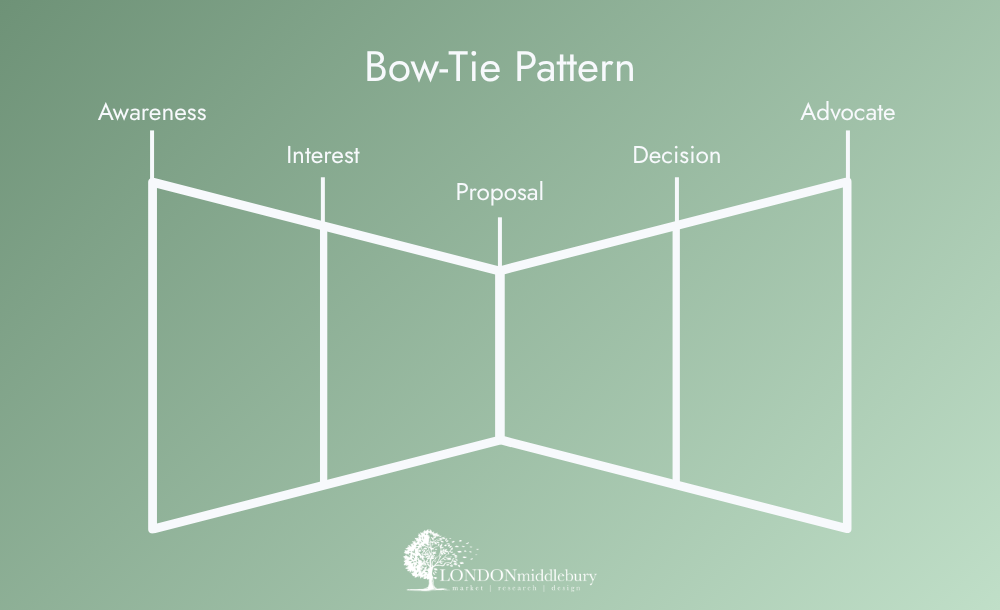
If your customers are following this shape, great! You’re successfully converting viewers into leads. If your funnel follows a door knob, goldfish, trumpet, or direct funnel shape, it’s time to make some changes.
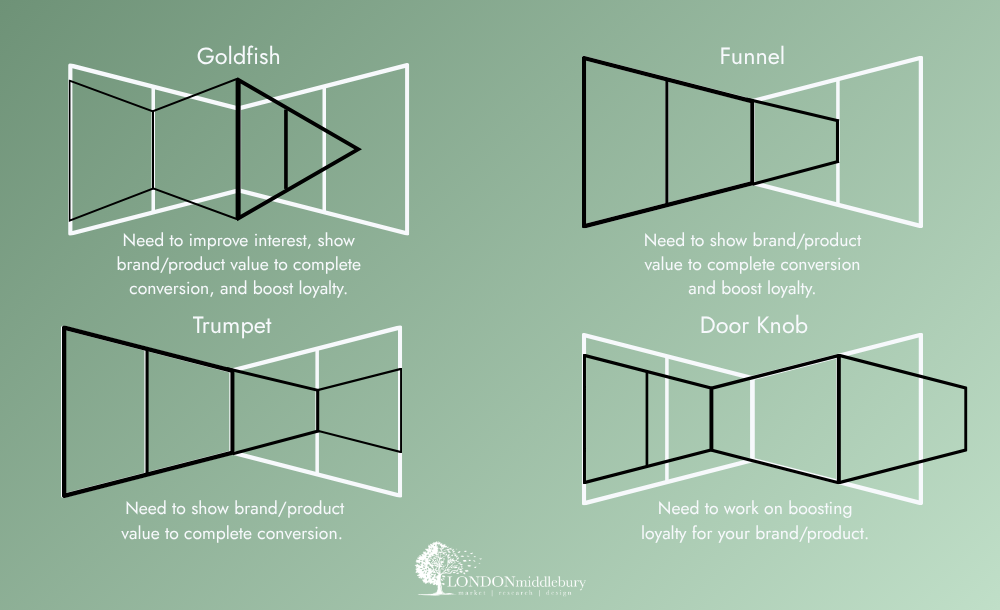
These four diagrams show problematic structures your audience might be falling into. If your customers follow the…
- Goldfish Structure: You’ve built awareness around your brand or a specific product, but interest dies down quickly and conversions aren’t being completed. Buyers also aren’t being motivated to become brand ambassadors.
- Funnel Structure: You get customers in the door, they’re interested, but they don’t convert, and they don’t share their experience with others.
- Trumpet Structure: Customers are aware and interested in your product, and you’ve had the chance to propose a purchase, but the conversion doesn’t happen. However, the customers that do make it through the funnel share their experience with your brand.
- Door Knob Structure: All goes according to the ideal funnel structure, except once the journey is over, customers don’t become loyal brand ambassadors.
Here’s an example of an incomplete conversion: You have a great product, and you’re getting clicks on digital ads you created. However, the buyers aren’t completing transactions. This means you’re enticing potential customers and getting them interested, but something about your landing page isn’t working. You realize that when someone lands on the page, it isn’t easy to add the item to their cart. This is a great opportunity to fix any problems you come across to attempt to boost conversions. After a few weeks to a month, check again. How are customers responding to the change? This will give you a chance to optimize based on your results.
Once you’ve identified where your bottlenecks are, here are some suggestions to shake them out, based on the stage in the marketing funnel:
-
Awareness: Use social media content, digital ads, blogs posts, and webinars to provide value and answer common questions your customers might be asking.
-
Interest: Engage prospects with value exchanges, like downloading a whitepaper in exchange for their contact information, to turn them into a Marketing Qualified Lead.
-
Proposal: Give the customer a new opportunity they didn’t have before, like a discount or access to a free sales call with you.
-
Decision: Make it easy for customers to complete your desired action with a user-friendly landing page and add-to-cart option.
-
Advocate: Offer loyalty programs and special discounts for returning customers to show how you value their purchase.
Once you have an overview, it’s time to look at all of the individual channels you’ve been implementing as part of your marketing strategy. Order them from best to worst in terms of the leads they produce. For those that are working the best, figure out why. For those that aren’t producing the results you wanted, consider why. Finding the root cause, whether positive or negative, will help you decide how to move forward.
Brand Awareness
Brand awareness is about building a community of supporters, rather than straight selling. You want people to be familiar with your brand and your products, so when they need to fix a problem relevant to your products, they turn to your business first. That said, this type of goal is different to track.
Here’s how we like to analyze a brand awareness campaign, by channel:
-
Social Media: How are people interacting with your brand? How has your number of followers, engagement, and impressions changed? What types of content work better than others for your specific audience?
-
Email: People sign up for your newsletter content when they believe it’s valuable. How are you getting people to sign up? How are you retaining them to decrease unsubscribes? How are you providing them with valuable email content, and what types of content are getting clicks? For e-commerce and service industries, how are these clicks translating into purchases and bookings?
-
Digital Ads: How do people engage with your ads? Often, it’s hard to catch consumers’ attention when it comes to ads. Views are great, but what is the rate of your views compared to engagements? How do your digital advertising efforts interact with your organic social strategy?
-
Website: How are people interacting with your website? What gets them there in the first place? Once they’re on your site, where do they go next? How long do they stay? Do they come back? Do they take your desired action?
Compare these observations with the goals and objectives you set at the beginning of the campaign. How do they align, and where are the results drastically different? Once you have all the data, quantitative and qualitative, you can create a plan of action for where to place your efforts for the rest of the year.
Rebrand (or Brand Refresh)
A rebrand campaign might be the launch of a fresh look, name, or voice and tone. If you started a rebranding campaign this year, it’s time to see how your audience reacted. In addition to tracking KPIs, ask yourself these questions to analyze the response:
- How did your audience respond to the rebrand? Was it welcomed, or did it receive negative feedback?
- How has the response to your content changed? What content types get the highest engagement + impressions? How is your content different from pre-rebrand?
- How has your rebrand impacted brand awareness? If you have physical products on the shelf, how do they stand out in a way they didn’t before?
In addition to a rebranding campaign, you have the opportunity to focus your efforts elsewhere to boost brand awareness or lead generation. Now that customers are familiar with your rebrand, where will you go next?
How to use this year’s strategy to start paving the way for next year
This check-in has given you crucial information about your marketing journey so far. Whether you’re sticking to your planned strategy or taking a detour, Q3 is your opportunity to incorporate new insights while creating a new path for success next year. Capitalize on the strengths you’ve found, and find ways to improve on the weaknesses.
Here are the steps to take for the ultimate strategy session:
- Conduct an analysis of the market. See what’s trending in your industry and how they can impact your business, consumer behaviors, and new market opportunities.
- Set SMART goals. Using your market analysis and personal insights, create a goal that’s specific, measurable, achievable, relevant, and timely. Determine objectives and KPIs to complement your goals and help you with future analysis.
- Outline your campaigns. Brainstorm marketing campaigns that will help you work toward reaching your goals. Create a content strategy with identified channels to support these campaigns.
- Create your budget. Use your insights to allocate your budget to various campaigns and channels.
- Prepare for optimization. Set check-ins throughout the year to collect insights and pivot your strategy as needed.
As you go into next year with a plan, do your best to execute it while leaving the door open for flexibility and adaptation.
Staying ahead of the game next year
Remember: what works for this year’s marketing strategy likely won’t work next year. See how you can go above and beyond to grow your business’ success.
Here are our tips for staying on top of consumers trends and the execution of your marketing strategy:
- Put your marketing strategy into action, but also know when it’s the right time to pivot. You won’t see results right away. Give your campaigns time to sit with your audience and see if they work. If they consistently aren’t delivering, consider taking a different approach.
- Stay in-tune with what’s going on in your industry and beyond. Take time each week to research competitors and marketing trends to see what’s working for other businesses.
- Create an open discussion with your team to get feedback. Your team is here to support you. Start conversations with folks across departments to see what insights you can glean from them.
- Try something new. In addition to your existing marketing strategy, it doesn’t hurt to try something you’ve never tried before. See where you can incorporate new content types into your strategy.
As we rapidly approach the middle of the year, don’t miss your chance to analyze your marketing campaigns and plan and implement new strategies for Q3, Q4, and next year. By doing so, you’ll position your business in a place for success and adaptability, where you’ll see real marketing results.